How to Build a Brand for Your Small Business Online
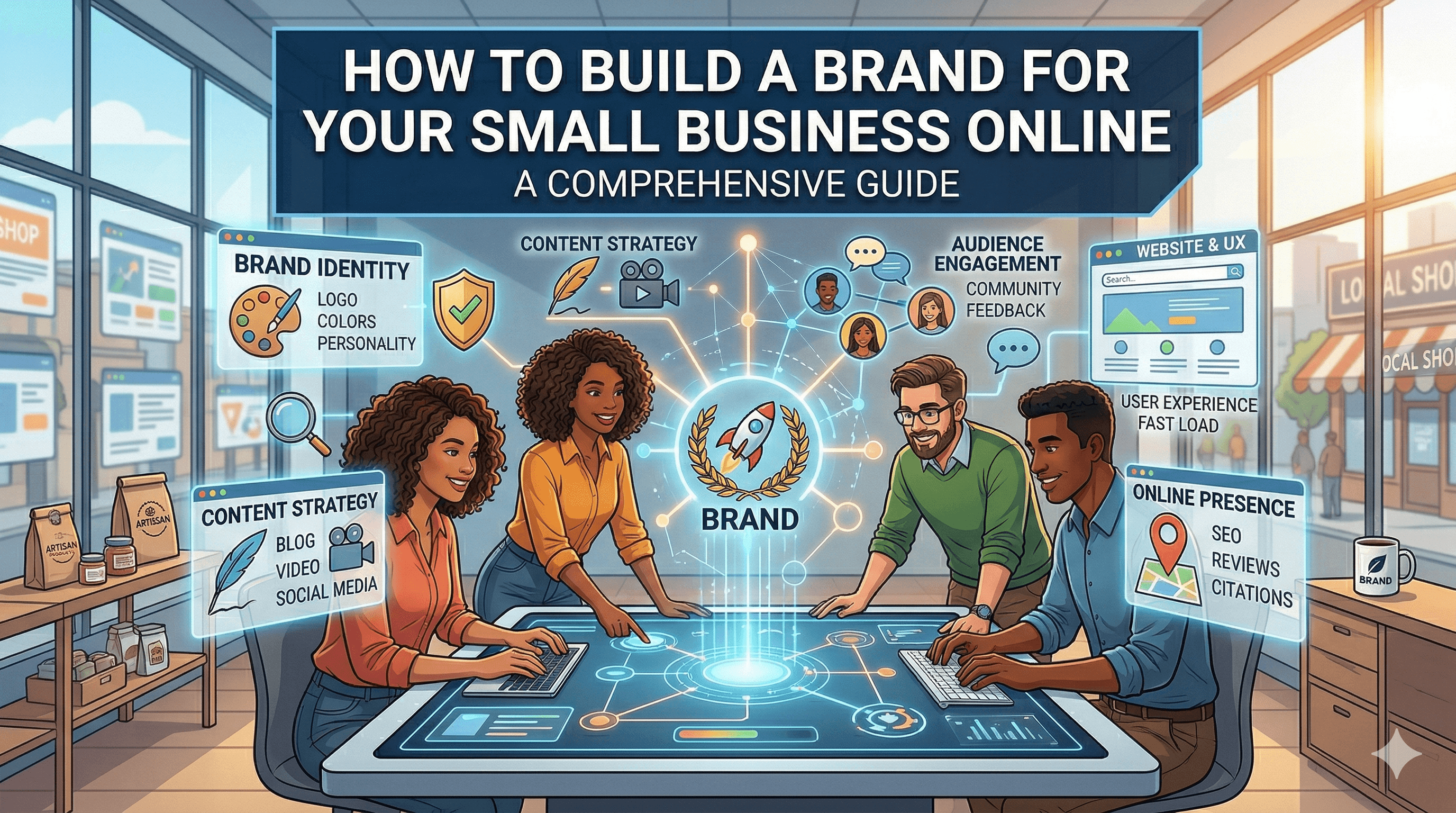
Your brand is not your logo. It is not your color palette, your business card, or your website design. Those are expressions of your brand, but the brand itself is something deeper. It is the perception people have of your business. It is what they think of when they hear your name, how they feel when they interact with you, and what they tell other people about their experience. For small businesses, building a strong brand is one of the most powerful competitive advantages available because it creates trust, loyalty, and differentiation that competitors cannot easily replicate. This guide shows you how to build a brand that resonates with your target audience and grows your business online.
What Brand Really Means for Small Businesses
Large corporations spend millions on branding. They hire agencies, run focus groups, and develop extensive brand guidelines. Small businesses do not have those resources, and the good news is you do not need them. What you need is clarity about who you are, who you serve, and why you are different.
Think of brand as the answer to three questions. First, what do you want people to think when they hear your business name? Second, how do you want people to feel when they interact with your business? Third, what makes choosing you a better decision than choosing a competitor?
Every branding decision you make, from your website design to your social media posts to how you answer the phone, should reinforce the answers to these three questions. Consistency across every touchpoint is what builds a recognizable, trustworthy brand over time.
A strong brand allows you to charge premium prices because customers trust the value you provide. It generates word-of-mouth referrals because people remember you and know how to describe you to others. It makes your marketing more effective because every piece of content reinforces a cohesive identity. And it creates an emotional connection that turns one-time buyers into lifelong customers.
Brand Positioning and Values
Before you design anything visual, you need to define your brand's strategic foundation. This is the work most small businesses skip, and it is the reason most small business branding feels generic and forgettable.
Define Your Target Customer
You cannot build a brand that resonates with everyone. The most powerful brands speak directly to a specific audience. Define your ideal customer in detail. What are their demographics (age, income, location)? What problems do they face that your business solves? What do they value most (price, quality, convenience, expertise, personal attention)? What are their fears or frustrations related to your industry?
A financial advisor targeting young tech professionals will build a very different brand than one targeting retirees, even though they offer similar services. The clearer your target customer, the sharper your brand.
Identify Your Differentiators
What makes your business genuinely different from competitors? This cannot be generic claims like "great customer service" or "high quality." Everyone says that. Dig deeper. Maybe you are the only plumber in your area who offers same-day service with a guaranteed two-hour arrival window. Maybe your bakery uses only locally sourced, organic ingredients. Maybe your consulting firm specializes exclusively in healthcare startups.
Your differentiator should be specific, meaningful to your target customer, and difficult for competitors to copy. If you cannot articulate a clear differentiator, that is a business strategy problem, not just a branding problem.
Establish Your Brand Values
Brand values are the principles that guide how your business operates. They influence your decision-making, your customer interactions, and your content. Choose three to five values that genuinely reflect how you run your business. Avoid aspirational values that sound nice but do not reflect reality.
Examples of meaningful brand values: transparency (you publish your pricing and never surprise customers with hidden fees), craftsmanship (you take extra time to ensure every project meets exacting standards), accessibility (you make your services available and understandable to people who typically find your industry confusing), or community (you actively invest in and support your local community).
Your values should show up in your actions, not just your website copy. If you claim to value transparency but hide your pricing and use high-pressure sales tactics, customers will notice the disconnect.
Visual Identity
With your strategic foundation in place, you can now build a visual identity that expresses your brand consistently.
Logo
Your logo does not need to be clever or complex. The best logos are simple, memorable, and work well at any size (from a favicon to a billboard). If you are on a tight budget, a clean wordmark (your business name in a distinctive typeface) is perfectly effective. Avoid overly trendy designs that will look dated in a few years. Invest in a professional designer if you can (expect to pay $300 to $2,000 for a quality small business logo), or use a tool like Looka or 99designs for a more affordable option.
Color Palette
Choose two to three primary colors and one to two accent colors. Your colors should reflect your brand personality. Blues and greens convey trust and calm. Reds and oranges convey energy and urgency. Neutrals convey sophistication and simplicity. Consider your industry norms, but do not feel bound by them. A financial services firm using an unexpected color can stand out precisely because it breaks the mold.
Use your colors consistently across your website, social media, email templates, printed materials, and any other customer touchpoints. Consistency is what makes colors start to feel like "yours" in your customers' minds.
Typography
Choose one or two typefaces and use them everywhere. A common approach is one typeface for headings (something with personality) and one for body text (something highly readable). Avoid using more than two typefaces, as it creates visual chaos. Google Fonts offers hundreds of free, professional typefaces that work well on websites and in printed materials.
Photography and Imagery Style
Define a consistent style for the images you use. Do you use bright, vibrant photography or muted, earthy tones? Candid shots or posed portraits? Illustrations or photographs? Stock photos are fine for many purposes, but try to incorporate original photography when possible. Photos of your actual team, workspace, products, and customers are far more authentic and trustworthy than generic stock images.
When building your small business website, apply your visual identity consistently across every page so visitors experience a cohesive brand from the moment they arrive.
Voice and Tone
Your brand voice is how you communicate in writing and speech. It should be distinctive and consistent across every channel: website copy, social media posts, email newsletters, customer service interactions, and printed materials.
Defining Your Voice
Think of your brand as a person. How would that person speak? Are they formal or casual? Serious or playful? Technical or plain-spoken? Authoritative or approachable?
Document your brand voice with three to four adjectives and examples. For instance: "Our brand voice is knowledgeable, approachable, and straightforward. We explain complex topics in plain language without talking down to our audience. We avoid jargon unless it is industry-standard terminology our audience already knows."
Voice Versus Tone
Your voice stays consistent, but your tone adapts to the situation. Think of it like a person who has a consistent personality but adjusts their tone based on context. Your tone in a celebratory social media post (enthusiastic, warm) will differ from your tone in a service disruption email (empathetic, direct, solution-focused), but both should feel like they come from the same brand.
Applying Voice to Your Content
Your brand voice shapes everything you write. It affects word choice, sentence length, use of humor, level of formality, and how you address your audience. For guidance on applying your voice to your most important pages, our article on writing website copy that converts covers how to balance brand personality with persuasive writing.
Write a short brand voice guide (even just one page) and share it with anyone who creates content for your business. This ensures consistency whether you are writing the copy yourself, delegating to an employee, or working with a freelancer.
Building Credibility and Trust Online
A beautiful brand identity means nothing without substance behind it. Credibility is built through consistent actions over time.
Your Website as Brand Headquarters
Your website is the central hub of your online brand. Every other channel (social media, email, directories, advertising) drives people back to your site. Make sure your website reflects your brand identity at every level: visual design, copywriting, user experience, and content quality.
Key trust-building elements for your website include a professional, polished design consistent with your brand identity. An about page that tells your story authentically (not a generic corporate biography). Customer testimonials and reviews displayed prominently. Case studies or portfolio examples that demonstrate results. Clear contact information and multiple ways to get in touch. Trust badges (industry certifications, association memberships, awards).
Content That Builds Authority
Publishing helpful, informative content positions your business as an expert in your field. Blog posts, guides, videos, and resources that genuinely help your target audience build trust long before someone becomes a customer. When they are ready to buy, they choose the business they already trust and view as knowledgeable. Consider whether starting a blog makes sense for your business. For most, the answer is yes.
Social Proof at Every Stage
Social proof (evidence that other people trust and choose your business) is one of the most powerful trust-building tools available. Collect and display reviews on Google, Yelp, and industry-specific platforms. Feature detailed testimonials on your website. Share customer success stories on social media. The more evidence potential customers see that others have had positive experiences with your business, the more comfortable they feel choosing you.
Consistency Across Channels
Your brand should feel the same everywhere a customer encounters it. Your Instagram should feel like the same business as your website, which should feel like the same business as your email newsletter, which should feel like the same business as your storefront or office. Inconsistency creates confusion and erodes trust. Consistency, even in small details, signals professionalism and reliability.
Brand Building on a Small Budget
You do not need a large budget to build a strong brand. Here are practical steps you can take at any budget level.
Free: Define your positioning, values, and voice. These cost nothing but your time and thought. Write your brand guide. Create consistent social media templates using Canva's free tier. Optimize your Google Business Profile with consistent branding.
Under $500: Get a professional logo designed. Purchase a premium website template that matches your brand aesthetic. Order branded email signatures for your team.
Under $2,000: Invest in professional photography of your team, workspace, and products. Hire a copywriter to write your core website pages in your brand voice. Create branded templates for proposals, invoices, and presentations.
Under $5,000: Develop a comprehensive visual identity package (logo, color palette, typography, brand guidelines). Redesign your website with a custom or heavily customized design. Create branded video content.
Each investment builds on the previous ones. Start with the free strategic work, then layer on visual and content investments as your budget allows.
Common Branding Mistakes
Copying competitors. If your brand looks and sounds like everyone else in your industry, you are invisible. Study competitors to find gaps and opportunities, not to imitate.
Rebranding too often. Brand recognition takes time to build. Changing your logo, colors, or messaging every year prevents recognition from accumulating. Evolve gradually rather than revolutionizing repeatedly.
Prioritizing aesthetics over substance. A beautiful brand that does not deliver on its promises creates disappointment and distrust. Make sure your operations and customer experience match your brand's external image.
Being inconsistent. Every inconsistency (different logos on different platforms, mismatched colors, different tones in different channels) chips away at your brand's credibility. Create templates, guidelines, and processes that ensure consistency.
Trying to appeal to everyone. A brand that tries to please everyone ends up resonating with no one. Have the confidence to speak directly to your target audience, even if that means others do not connect with your brand.
Taking the First Steps
Building a brand is not a one-time project. It is an ongoing process of defining who you are, communicating that identity consistently, and reinforcing it through every customer interaction. Start with the strategic foundation: define your target customer, your differentiators, and your values. Then build your visual identity and voice on that foundation. Apply them consistently across every touchpoint, starting with your website and expanding to social media, email, and other channels. Over time, these consistent signals accumulate into a brand that customers recognize, trust, and choose over alternatives. That recognition is one of the most valuable assets your small business can build.