Does Your Small Business Website Need a Blog?
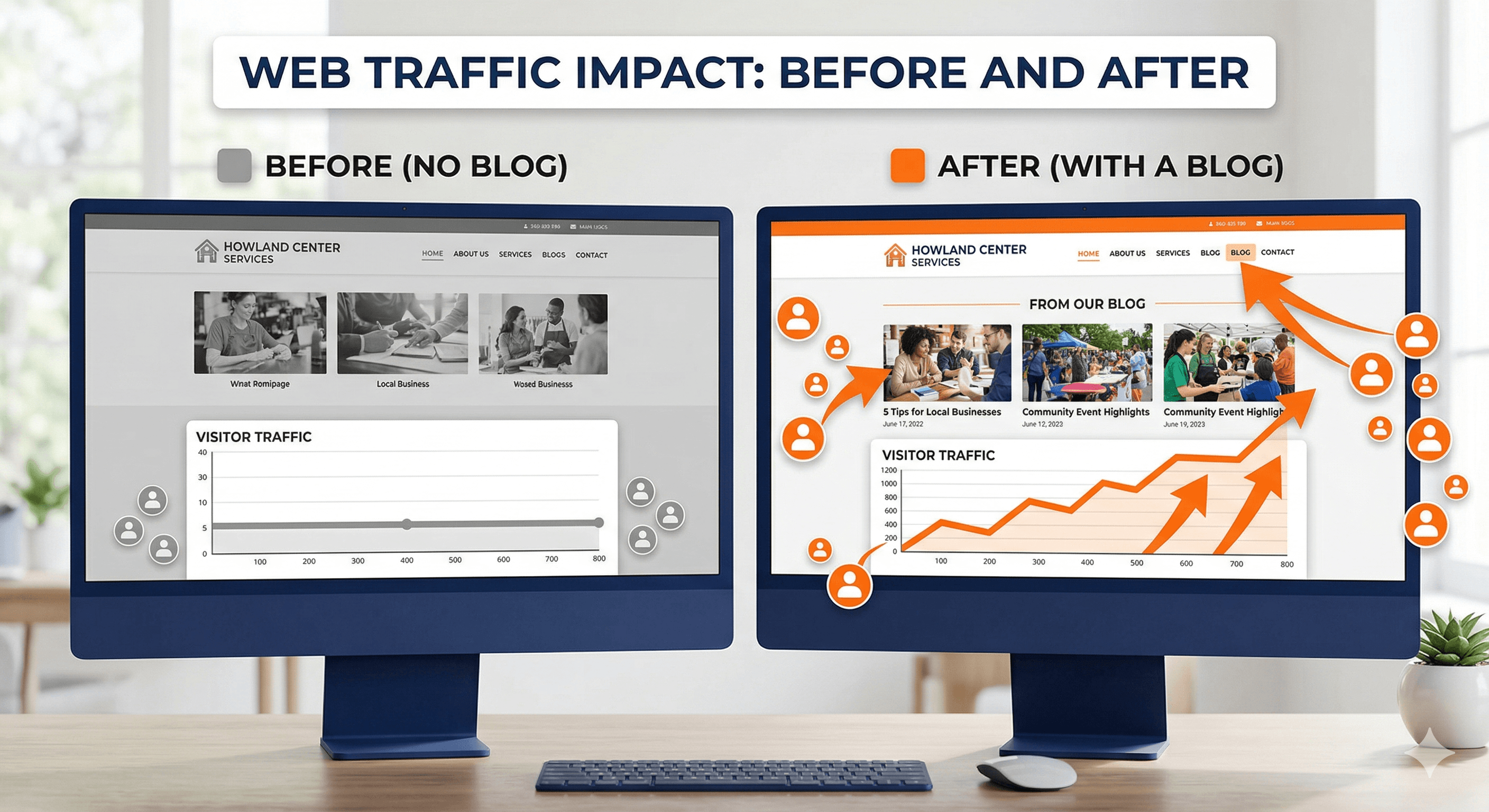
If you run a small business website, you have probably asked yourself whether adding a blog is worth the effort. After all, you are busy running a company. Writing articles might feel like the last thing on your priority list. But here is the truth: a well-maintained blog is one of the most powerful tools a small business can use to attract new customers, build trust, and grow revenue over time.
Why Blogs Matter for Small Businesses
A blog transforms your website from a static online brochure into a living, breathing resource that works for you around the clock. Without a blog, your website has a limited number of pages, which means a limited number of opportunities for search engines to find you and send visitors your way. Every blog post you publish creates a new indexed page on your site, giving Google another chance to show your business in search results.
Think of it this way. A small business website with five pages has five chances to rank in search results. That same website with a blog publishing two posts per month has over 50 indexed pages after just two years. Each of those pages can rank for different keywords and attract different types of customers.
Beyond search visibility, a blog gives your business a voice. It lets you share your expertise, answer customer questions, and demonstrate that you understand your industry better than your competitors. In an era where consumers research businesses online before making purchasing decisions, that kind of authority can be the difference between winning or losing a sale.
The SEO Benefits Are Hard to Ignore
Search engine optimization is one of the primary reasons small businesses start blogging, and for good reason. If you are new to SEO, our complete SEO guide covers the fundamentals every small business owner should understand. Google rewards websites that consistently publish fresh, relevant content. A blog gives you the perfect vehicle to do exactly that.
Each blog post allows you to target specific keywords your potential customers are searching for. A local plumber, for example, might write posts targeting phrases like "how to fix a leaky faucet," "signs you need to replace your water heater," or "best plumbing maintenance tips for homeowners." These are real searches that real people make every day, and each one represents an opportunity to get your business in front of someone who might need your services.
Blogging also helps you build internal links between your pages, which strengthens your overall site structure and helps search engines understand what your website is about. When you write a blog post about water heater maintenance and link to your water heater repair service page, you are telling Google that your business is an authority on that topic.
Additionally, quality blog content earns backlinks from other websites. When other sites link to your helpful articles, Google sees those links as votes of confidence, which can significantly boost your rankings across your entire site.
Building Authority and Trust
Customers want to buy from businesses they trust. A blog is one of the most effective ways to build that trust before a potential customer ever picks up the phone or fills out a contact form.
When someone lands on your website and finds a library of helpful, well-written articles that address their questions and concerns, they immediately perceive your business as knowledgeable and credible. This is especially important for small businesses competing against larger companies with bigger marketing budgets. You may not be able to outspend them on advertising, but you can absolutely out-educate them with valuable content.
Consider a local accounting firm. If a potential client visits their website and finds detailed articles about tax preparation tips, common bookkeeping mistakes, and guides on choosing the right business structure, that firm has already demonstrated expertise before the first consultation. The client walks in with confidence that they are working with a capable professional.
Turning Readers into Leads and Customers
A blog does more than attract visitors. It gives you the opportunity to convert those visitors into leads and paying customers. Every blog post is a chance to include a call to action, whether that is signing up for a newsletter, downloading a free guide, requesting a quote, or scheduling a consultation.
The key is matching your call to action with the content of the post. If someone is reading about how to choose the right web hosting provider, they are likely in the research phase. A call to action offering a free website audit or a comparison checklist would be relevant and valuable. If someone is reading about common signs of a failing HVAC system, a call to action offering a free inspection makes perfect sense.
Over time, your blog becomes a lead generation engine that runs on autopilot. Posts you wrote months or even years ago continue to attract visitors from search engines and convert them into customers without any additional effort on your part.
What Should You Write About?
Coming up with blog topics is easier than most business owners think. Start by writing down the questions your customers ask you most frequently. These are goldmines for blog content because they represent real information needs that your audience has.
Here are some reliable content categories that work for nearly every small business. Educational content teaches your audience something useful, like "5 Ways to Reduce Your Energy Bill This Winter." Industry news keeps readers informed about changes or trends in your field. How-to guides walk readers through a process step by step. Case studies and success stories showcase your work and results. Frequently asked questions address common concerns and objections.
You can also look at what your competitors are blogging about and find ways to cover the same topics more thoroughly or from a different angle. Tools like Google's "People Also Ask" feature and keyword research platforms can help you discover topics your audience is actively searching for. For a deeper look at finding the right terms to target, check out our guide on keyword research for small businesses.
How Often Should You Post?
Consistency matters more than frequency. Publishing one high-quality post per week is better than publishing five mediocre posts in one week and then going silent for two months. Search engines and readers alike reward consistency.
For most small businesses, publishing one to two blog posts per month is a realistic and effective pace. This keeps your website fresh in Google's eyes, gives you a steady stream of new content to share on social media, and does not overwhelm your schedule.
If you can manage more, great. But do not sacrifice quality for quantity. A single well-researched, thoroughly written post will outperform a dozen thin, rushed articles every time.
Getting Started with Your Business Blog
Starting a blog does not require a massive investment or a professional writing background. Here are some practical steps to get going.
First, set up a blog section on your existing website. Most modern website platforms make this straightforward. If your site runs on WordPress, you already have blogging functionality built in. If you are using a static site or a platform that does not support blogging natively, consider a headless CMS or a platform that makes it easy to add and manage content.
Second, create a simple content calendar. Our guide on creating a content marketing plan walks you through this step by step. Plan out your first three months of topics so you always know what to write next. This eliminates the "blank page" paralysis that stops many business owners before they start.
Third, write for your audience, not for yourself. Learning how to write website copy that converts will help you craft posts that resonate. Use language your customers use. Avoid industry jargon unless you explain it. Keep paragraphs short and use headings to break up your content so it is easy to scan.
Fourth, promote every post. Share it on your social media channels, include it in your email newsletter, and consider linking to it in your email signature. A blog post that nobody sees cannot generate results.
Finally, be patient. Blogging is a long-term strategy. Most businesses start seeing meaningful traffic growth after three to six months of consistent publishing. The results compound over time, with each new post adding to the momentum of the posts that came before it.
The Bottom Line
A blog is not a luxury for small businesses. It is a practical, proven marketing tool that drives organic traffic, builds trust with potential customers, and generates leads around the clock. The businesses that invest in blogging consistently are the ones that dominate local search results, earn customer loyalty, and grow steadily year after year. If your small business website does not have a blog yet, there has never been a better time to start one.