The Number One Way Small Businesses Kill Their Own Rankings
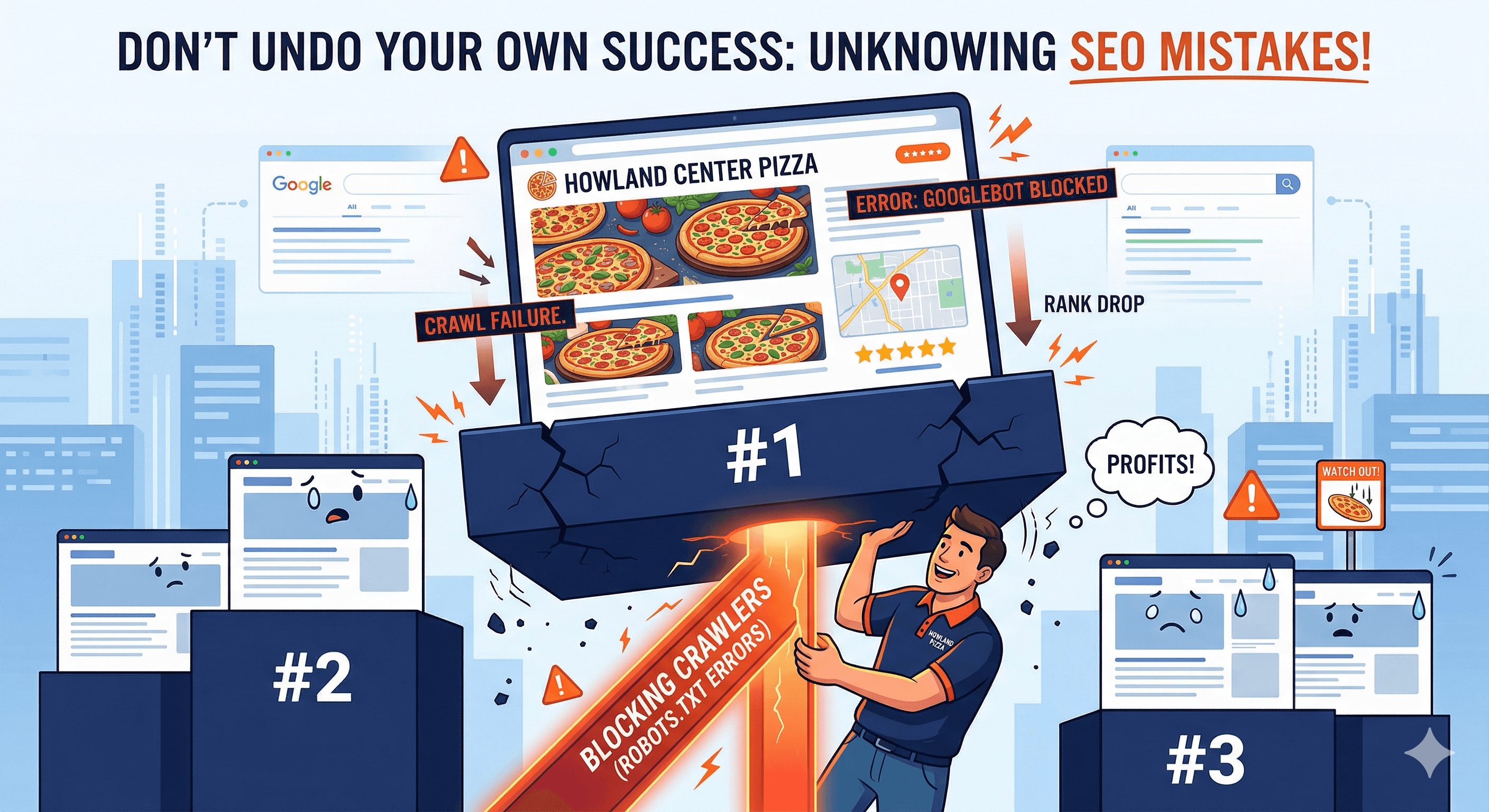
Every week, thousands of small business owners wonder why their website does not show up on Google anymore. They paid a web designer to build a beautiful site. They launched it with enthusiasm, shared it on social media, and maybe even ran some ads. Then they moved on to running their business and never touched the website again. Six months later, their rankings have vanished. A year later, their website is practically invisible.
This is the number one way small businesses kill their own search engine rankings: neglecting their website after launch.
The "Set It and Forget It" Trap
It is one of the most common misconceptions in small business marketing, and it is just one of several myths we address in the truth about SEO for small businesses. Many owners believe that once a website is built and launched, it will continue to perform indefinitely without any ongoing attention. This could not be further from the truth.
A website is not a billboard. You do not put it up, walk away, and expect it to keep working for years. A website is more like a storefront. It needs regular cleaning, restocking, maintenance, and updates to stay attractive and functional. When you stop maintaining it, things start to break down, and both your visitors and search engines notice.
Google's algorithm evaluates websites continuously, not just once. For a full breakdown of how search engines rank sites, read our complete SEO guide. When Google sees a website that has not been updated in months, has no fresh content, and still displays information from years ago, it draws a clear conclusion: this website is no longer actively serving its audience. And Google responds by pushing that site further and further down in search results, replacing it with competitors who are actively maintaining and improving their online presence.
How Search Engines Reward Freshness
Google has confirmed that content freshness is a ranking factor. This does not mean you need to publish something new every day. It means that websites showing signs of active maintenance and regular updates receive a ranking advantage over stagnant websites.
Freshness signals include publishing new content (like blog posts or updated service pages), updating existing content with current information, fixing broken links, adding new images or media, and improving page load performance. Each of these actions tells Google that a real person is actively managing this website and keeping it relevant for visitors.
On the other hand, staleness signals include outdated copyright dates in the footer, blog posts from three years ago with no new entries, broken links that lead to error pages, references to discontinued products or past events, and contact information that no longer works. When Google's crawlers encounter these signals repeatedly, your site's authority and trustworthiness scores decline, and your rankings follow.
The Snowball Effect of Neglect
Website neglect does not just affect your rankings in one area. It creates a cascading series of problems that compound over time.
First, your content becomes outdated. Industry best practices change, pricing changes, services evolve, and regulations update. When your website still reflects information from two years ago, visitors who land on your pages find content that does not match their current reality. They leave quickly, which increases your bounce rate.
Second, a high bounce rate sends negative signals to Google. When visitors consistently click on your search result and then immediately return to Google to click on a competitor instead, Google interprets this as a sign that your page did not satisfy the searcher's intent. Over time, Google will show your pages less frequently and rank them lower.
Third, technical issues accumulate. Software updates for your content management system, plugins, and themes go uninstalled. Security vulnerabilities emerge. SSL certificates expire. Page speed degrades as web standards evolve and your site falls behind. We break down the financial impact in our article on how slow websites cost small businesses millions. Each of these technical problems independently hurts your rankings, and together they can be devastating.
Fourth, your competitors are not standing still. While you neglect your site, your competitors are publishing new content, earning backlinks, optimizing their pages, and improving their user experience. Search rankings are relative. Even if your site stays exactly the same, you will fall in rankings simply because your competitors are improving.
What a Neglected Website Looks Like to Customers
The damage goes beyond search rankings. When a potential customer does find your neglected website, whether through search, social media, or a direct referral, what they see does not inspire confidence.
Outdated design trends make your business look behind the times. Blog posts from 2022 with no recent entries suggest the business might not even be operating anymore. Broken contact forms mean lost leads. Slow loading pages frustrate visitors on mobile devices. And outdated information, like old pricing, former employees listed on the team page, or references to past promotions, creates confusion and erodes trust.
In a world where consumers form opinions about a business within seconds of landing on their website, a neglected site is actively working against you. It is worse than having no website at all, because at least the absence of a website does not create a negative impression.
How to Maintain Your Website for Better Rankings
The good news is that maintaining a website does not require a massive time investment. A few hours per month is enough to keep your site fresh, functional, and competitive in search results.
Publish fresh content regularly. This is the single most impactful thing you can do. Start by learning how to do keyword research so every piece of content targets terms your customers actually search for. A blog post twice a month, an updated FAQ, a new case study, or a refreshed service page all count as fresh content. You do not need to write a novel. Even short, focused updates signal to Google that your site is active.
Update existing content. Go through your most important pages at least once a quarter. Are the prices still accurate? Do the team bios reflect your current staff? Are there any references to past events or outdated statistics? Update anything that no longer reflects reality.
Fix broken links. Use a free tool like Broken Link Checker or Screaming Frog to scan your site for broken links. Every broken link is a dead end for both visitors and search engine crawlers. Fix them by updating the link to the correct URL or removing it entirely.
Keep your software updated. If you run WordPress or any other content management system, keep the core software, themes, and plugins updated. These updates often include security patches and performance improvements that directly affect your site's health and search visibility.
Monitor your site's performance. Check your Google Search Console account at least once a month. Look for crawl errors, indexing issues, and manual actions. Review your Core Web Vitals scores and address any pages that fall below the recommended thresholds.
Refresh your images and media. Stock photos from 2018 feel dated. Update your visuals periodically with current photos of your team, your work, your products, and your location. This improves the visitor experience and gives Google fresh content to index.
Building a Simple Content Calendar
You do not need a complex marketing plan to keep your website maintained. A simple content calendar can make all the difference.
Start by blocking out two to four hours per month for website maintenance. Divide that time between content creation (writing or updating one to two blog posts or pages) and technical maintenance (checking for broken links, updating software, reviewing analytics).
Plan your content topics at least one month in advance. Keep a running list of ideas based on customer questions, industry news, seasonal topics, and competitor content. When it is time to write, you will never be starting from scratch.
Set calendar reminders for quarterly tasks like reviewing all service pages for accuracy, checking that your contact information is correct everywhere, auditing your site speed, and renewing your SSL certificate and domain registration before they expire.
The Bottom Line
Your website is not a one-time project. It is an ongoing asset that requires regular attention to maintain its value. The small businesses that treat their websites as living, evolving platforms are the ones that consistently rank well, attract new customers, and outperform their competitors. The ones that launch a site and walk away are the ones wondering why Google stopped sending them traffic. Do not let your website become a digital ghost town. A small, consistent investment of time is all it takes to keep your rankings healthy and your business growing.